
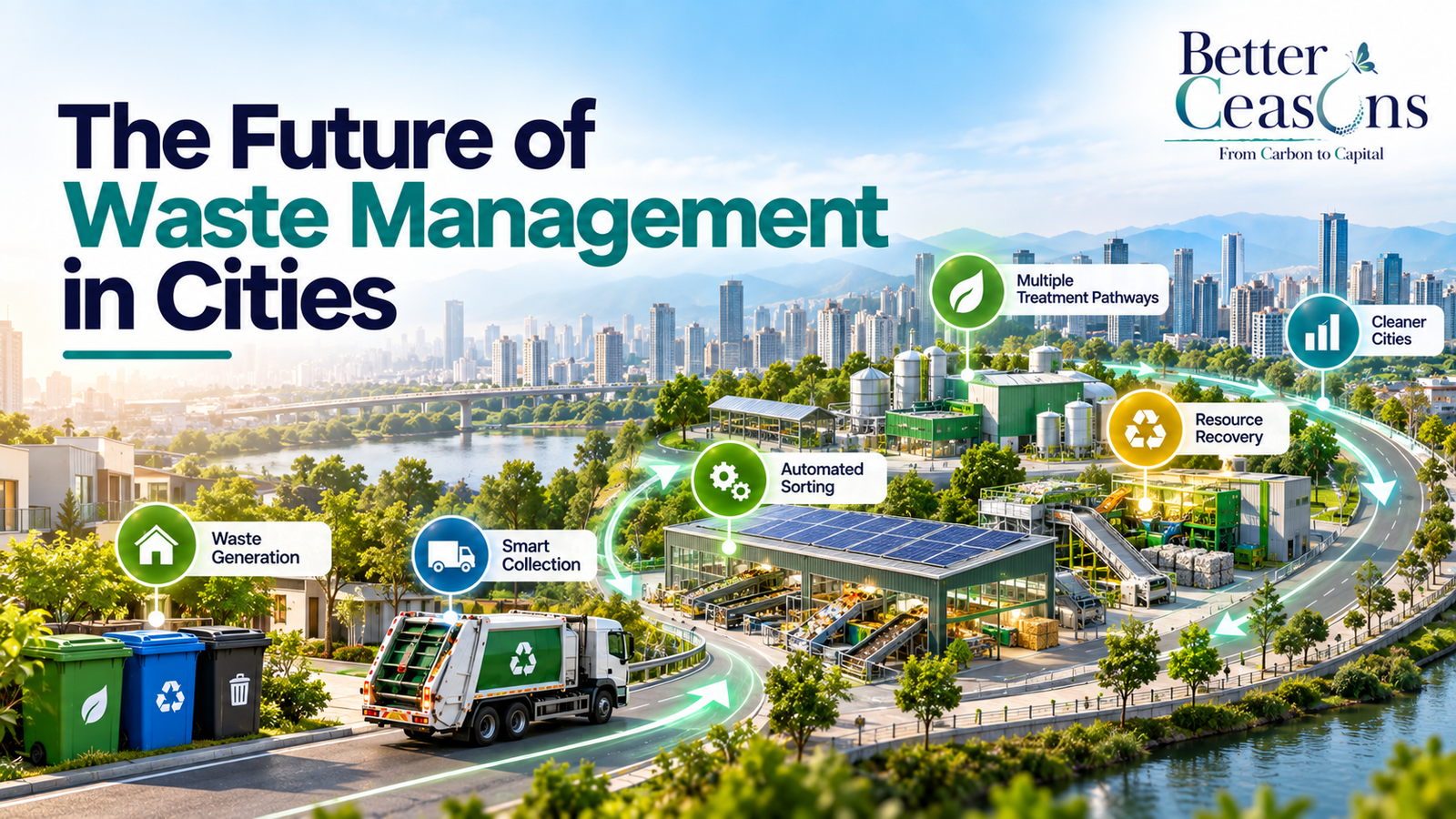
The future of waste management in cities will rely on better data, smarter collection, improved segregation, automated sorting, multiple treatment pathways and stronger resource recovery. Cities will increasingly need to understand waste as different material streams rather than one uniform disposal problem.
Quick Answer
The future of waste management in cities will rely on better data, smarter collection, improved segregation, automated sorting, multiple treatment pathways and stronger resource recovery. Cities will increasingly need to understand waste as different material streams rather than one uniform disposal problem.The Traditional Model Is Under Pressure
For decades, urban waste management has followed a familiar pattern: Generate. Collect. Transport. Dispose. This approach can create clean streets, but it does not automatically create good material outcomes. Growing populations and increasingly complex products are making disposal-focused systems harder to sustain.Future Cities Will Need Better Data
Waste systems cannot improve what they do not understand. Cities need reliable information on:- quantity generated
- material composition
- neighbourhood demand
- route performance
- treatment capacity
- recovery rates
- residual waste
Smart Collection Will Reduce Inefficiency
Collection vehicles currently follow schedules and routes that may not always match real demand. Future systems may use:- digital route optimisation
- fill-level sensors
- fleet monitoring
- dynamic scheduling
- traffic data
Vehicle Technology Will Change
Waste fleets may gradually adopt cleaner powertrains where infrastructure allows. Electric and alternative-fuel vehicles can reduce certain direct emissions. However, cleaner vehicles should be combined with better routing. Technology cannot compensate for inefficient operations.Sorting Will Become More Automated
Future material-recovery facilities may increasingly use:- optical sensors
- artificial intelligence
- robotics
- machine vision
- automated quality control
Segregation Will Become More Outcome-Focused
Better Ceasons discusses the limitation of treating segregation as the final solution through Segregation The Urban Myth. Future cities will need to ask: Why are we separating this material? Where will it go? Can it actually be recovered? Segregation should be designed around downstream outcomes.Cities Will Need Multiple Treatment Pathways
Urban waste includes:- food
- paper
- glass
- metals
- plastics
- multilayer packaging
- textiles
- commercial waste
- construction material
Organic Waste Needs Biological Solutions
Food and other biodegradable material may require composting, anaerobic digestion or other biological pathways depending on local conditions. Keeping organic material separate from dry recoverables can improve both systems.Conventional Recycling Will Remain Important
Paper, metals, glass and certain plastics can continue moving through established recycling systems. Technology may improve material purity and processing efficiency. However, cities also need plans for what recycling cannot handle.Advanced Processing Will Expand
Some difficult waste streams may require advanced processing. This can include chemical, thermal or specialised mechanical systems. For suitable carbon-containing materials, controlled thermal transformation may provide additional recovery pathways. Better Ceasons explores one such approach through Pyrolysis and Net Zero.Resource Recovery Technology Will Grow
Future waste systems will increasingly focus on recovering useful value rather than simply reducing landfill volume. Resource recovery technology may capture:- reusable materials
- recyclable feedstock
- biological value
- useful energy
- chemical fractions
Carbon Will Become a Waste Metric
Traditionally, cities measure waste mainly in tonnes. Future systems will increasingly examine the carbon impact of:- transportation
- methane
- processing energy
- treatment
- material replacement
Local Treatment Can Reduce Long Waste Journeys
Where technically and economically practical, appropriately distributed facilities can reduce long-distance transport. However, decentralisation should not come at the cost of environmental performance or proper controls. Scale needs to match the technology.Digital Traceability Will Improve Accountability
One of today's biggest waste problems is losing visibility after collection. Future systems may record:- origin
- weight
- collector
- destination
- treatment type
- recovered output
- residual waste
Public Awareness Will Need to Evolve
Citizens are often told what bin to use. Future education should explain the whole journey. People should understand why contamination matters, why multilayer plastics are difficult and why different waste streams require different pathways.The City of the Future Will Treat Waste as Material
Better Ceasons’ The Waste Illusion reflects an important shift. Waste does not disappear because it has left the street. The future city will therefore move from asking: “Where can we send this waste?” to: “What is this material, and what should happen to it next?”Innovation Will Be Systemic
Waste treatment innovation will not be limited to new machines. Innovation will also come through:- better policy
- smarter procurement
- improved logistics
- stronger data
- better facility integration
- clearer accountability
- stronger public awareness
Final Thought
The future of waste management will not be defined by one revolutionary invention. It will be built from many connected improvements. Smarter collection. Better sorting. Material-specific treatment. Resource recovery. Carbon awareness. Transparent data. Most importantly, cities will need to stop treating waste as one uniform substance. The moment waste becomes visible as a collection of different materials with different values and risks, better decisions become possible. That is the direction Better Ceasons represents: moving beyond simply managing what society throws away and asking what better outcome may still be possible.How Cities Can Build a Future-Ready Waste Management System
A practical framework for improving urban waste management through better data, smarter collection, automated sorting, material-specific treatment and stronger resource recovery.
Improve waste data
Track waste quantities, material composition, neighbourhood demand, route performance, treatment capacity, recovery rates and residual waste.
Make collection smarter
Use route optimisation, fill-level information, fleet monitoring, dynamic scheduling and traffic data to reduce unnecessary collection journeys.
Improve segregation outcomes
Design segregation systems around real downstream recovery and treatment options rather than treating separation as the final solution.
Automate material sorting
Use optical sensors, machine vision, artificial intelligence, robotics and automated quality control where appropriate to improve material identification.
Develop multiple treatment pathways
Use different treatment systems for food, paper, glass, metals, plastics, multilayer packaging, textiles and other distinct waste streams.
Expand resource recovery
Recover reusable materials, recyclable feedstock, biological value, useful energy or chemical fractions where suitable and practical.
Track carbon impacts
Consider transportation, methane, treatment energy, processing and material substitution when evaluating the environmental performance of waste systems.
Improve digital traceability
Record the origin, weight, collector, destination, treatment pathway, recovered output and residual material to strengthen accountability.
Improve public awareness
Explain why contamination matters, why different materials require different pathways and what happens to waste after collection.
Integrate the complete waste system
Connect collection, sorting, recycling, biological treatment, advanced processing, resource recovery and controlled final disposal into one coordinated system.
Key Questions Answered
What will the future of waste management look like?↓
Future systems will combine smart collection, automated sorting, specialised treatment, resource recovery and better waste data.
Will AI play a role in waste management?↓
Yes. AI can support route optimisation, material recognition, robotic sorting and operational monitoring.
Will cities stop using landfills?↓
Residual waste will likely continue requiring controlled disposal, even as recovery improves.
What is the role of advanced waste processing?↓
It provides additional treatment options for materials that conventional recycling struggles to handle.
Why is resource recovery important for cities?↓
It helps cities recover useful value from material that might otherwise be treated only as disposal waste.
Written by Team Better Ceasons
Better Ceasons Editorial Team
Better Ceasons is a clean-technology enterprise transforming municipal solid waste streams into high-value carbon resources and renewable energy.
Explore Clean Tech Solutions
Better Ceasons has developed a solution that converts suitable plastic waste into fuel, supporting responsible resource recovery.
Contact Better Ceasons