
01
The Unspoken
The conversation for some types of waste is avoided even before it is understood.
Hazardous protein waste, human waste and animal waste are rarely part of most conversations. Avoidance can never replace impact.
Better Ceasons is a solutions provider for waste transformation, energy recovery and resource recovery, developing responsible pathways for suitable waste streams. Before change is introduced to the world, it begins with how we see the problem.
The Butterfly Effect of Waste
This is not a product reveal. It is the beginning of a cleaner conversation. A conversation that is thought-led, deeply impactful and necessary for a cleaner future for everyone.
The Unspoken
Hazardous protein waste, human waste and animal waste are rarely part of most conversations. Avoidance can never replace impact.
The Invisible
Once waste leaves our homes, workspaces and neighbourhoods, the story continues through invisible unseen routes that shape our environment.
The Stigma
The problem is not only waste. There is also hesitation around naming it, understanding it and speaking about it through the science of carbon and the economics of value addition.
The Shift
Before anything changes outside, something must change within the way we perceive waste. Better Ceasons begins with awareness, education and a lens that is honest, responsible and clean.
The Possibility
The future of waste will be shaped by better awareness of carbon, cleaner choices and the ability to see value where others see discomfort.
The Wealth of Waste
Waste carries value beyond wealth. It carries the unspoken value of climate action, civic cleanliness, responsible conversion and a cleaner environment.
These are not used for shock value. They are starting points for awareness, education and a more responsible public conversation.
Explore Better Ceasons
Waste does not disappear. It only changes location, form and consequence.
The crucial building block of life, balance and climate responsibility.
A closer look at mimicking nature, conversion and carbon-aware systems.
Why segregation alone organises the problem but does not solve it.
The people and institutions helping shape the next waste conversation.
The quiet revolution taking shape behind closed doors.
Latest Insights
Deep dives into carbon-aware systems, the waste stigma, and the future of responsible conversion.
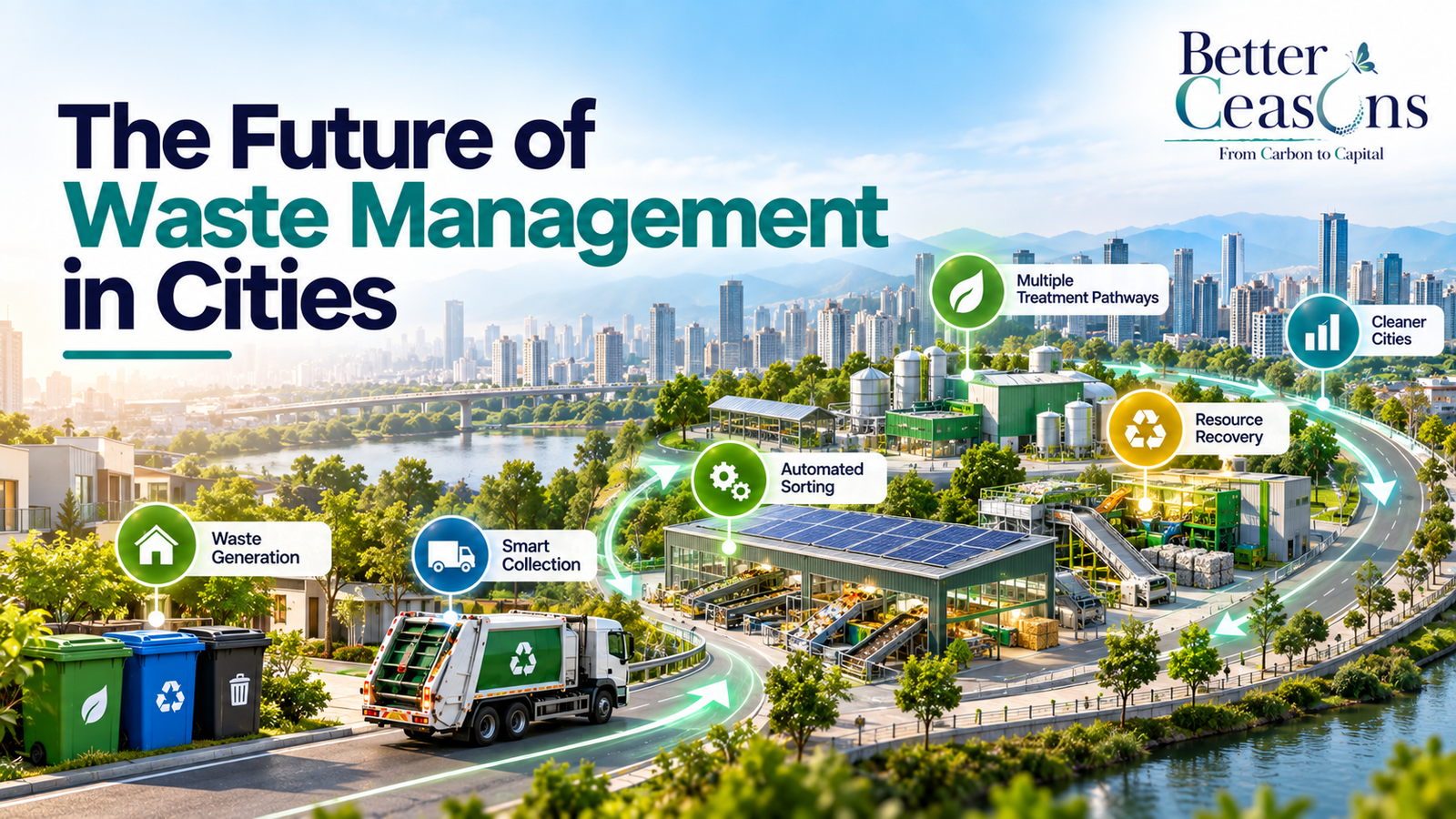
Explore the future of waste management through smarter collection, automated sorting, resource recovery, carbon tracking and advan...
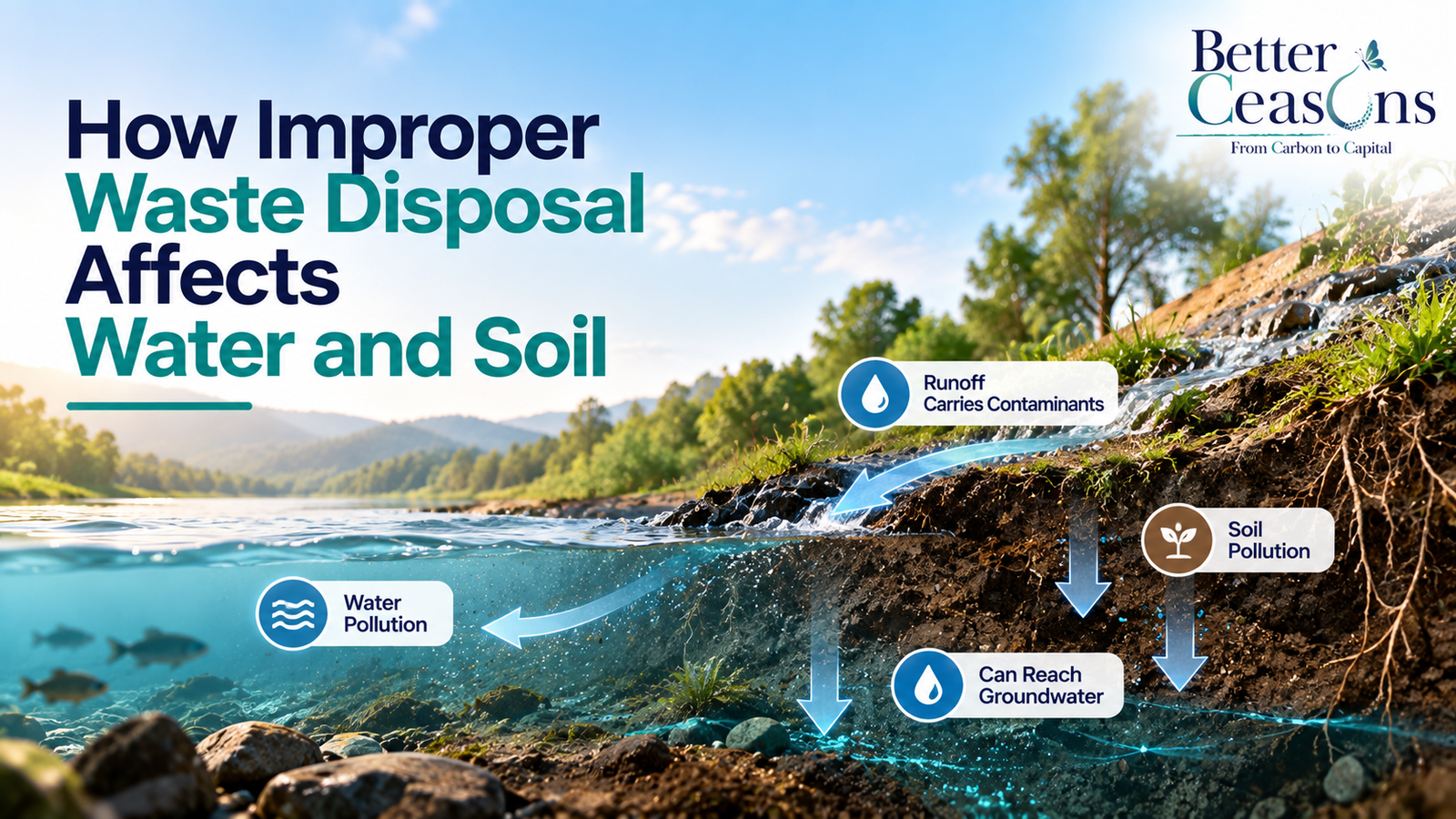
Learn how improper waste disposal can affect water and soil through runoff, leakage, plastic fragmentation and uncontrolled contam...
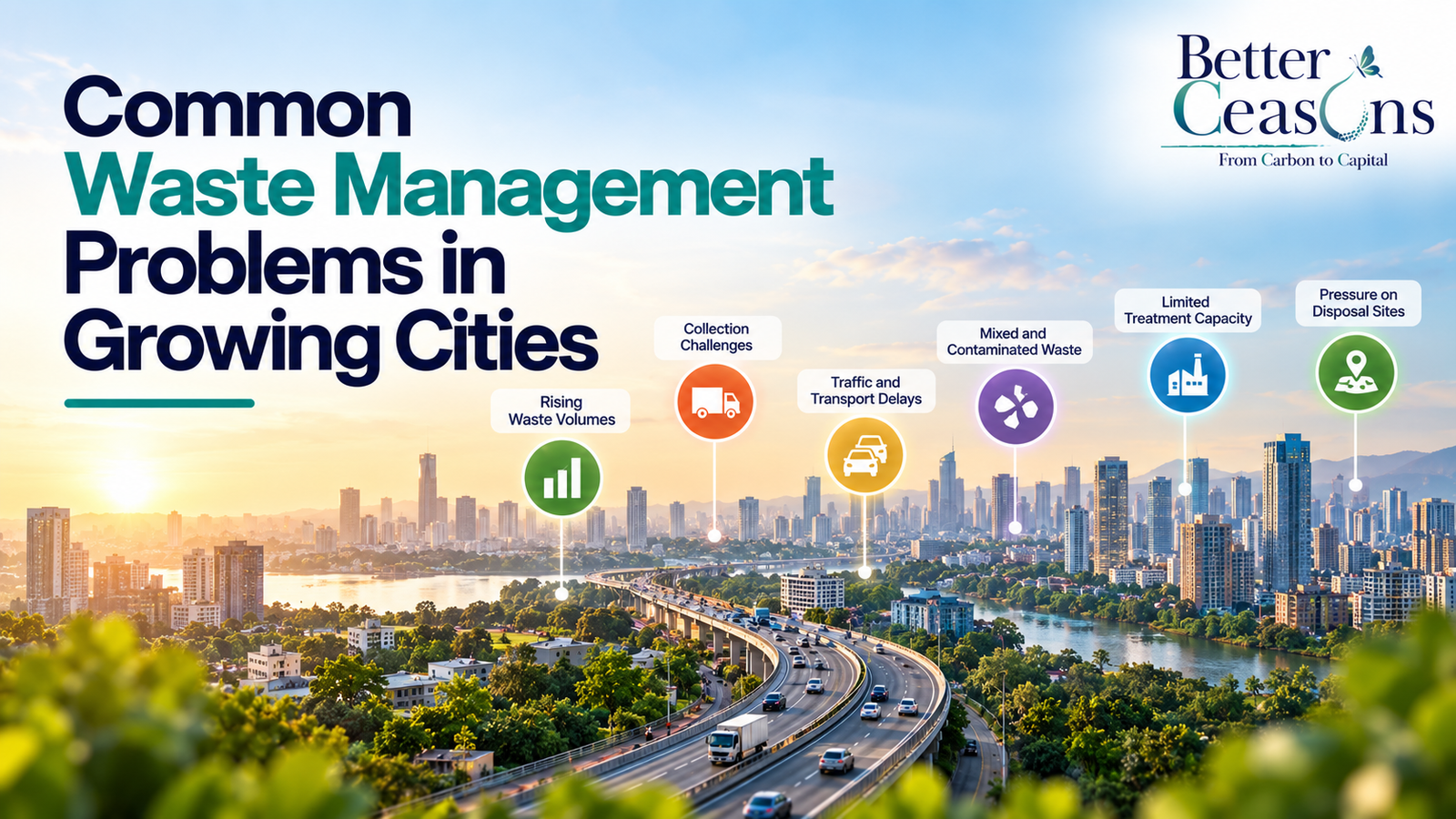
Explore common waste management problems in growing cities, including rising volumes, collection gaps, treatment capacity and infr...
Further reading
Questions & answers
Waste-to-energy technology refers to approaches that use suitable waste materials to recover useful energy instead of treating them only as something to dispose of.
The method used depends on the type and condition of the waste.
Waste se energy banane se pehle yeh samajhna zaroori hai ki waste kis type ka hai aur usme kya useful value bachi hui hai.
Suitable waste ko controlled systems ke through handle karke uski energy potential ko recover kiya ja sakta hai.
Har waste same nahi hota, isliye har material ke liye approach bhi alag ho sakti hai.
Energy recovery from waste means recovering useful energy from suitable materials that may otherwise be left unused or sent for disposal.
It is one way of looking at waste as a possible resource rather than only a problem.
Sabse pehle waste ko sirf “kachra” nahi, ek material ke roop mein samajhna padta hai.
Uske type, condition aur possible value ko samajhne ke baad decide kiya ja sakta hai ki usse energy ya kisi aur useful resource mein convert karne ka scope hai ya nahi.
No.
Recycling generally focuses on recovering material so it can be used again.
Waste-to-energy focuses on recovering useful energy from suitable waste streams.
Both deal with recovering value, but they are not the same process.
Some types of organic waste can have useful energy potential.
Whether they are suitable depends on the material, its condition and the approach being used.
Because disposal does not always have to be the first or only option.
When useful value can responsibly be recovered from suitable materials, waste can become part of a more productive system.