
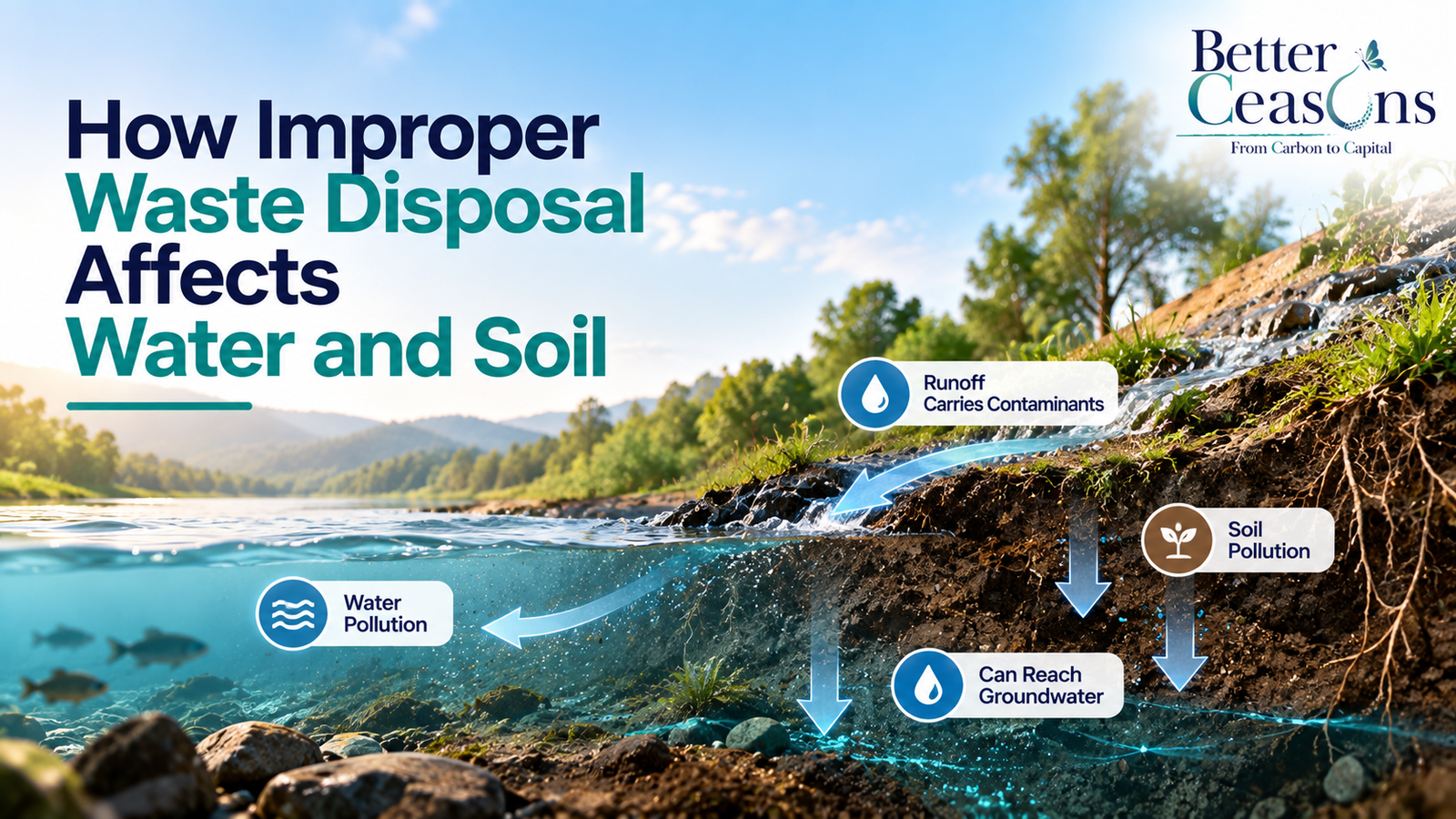
Improper waste disposal can affect soil and water when rain, runoff, leakage and fragmented materials carry contaminants away from uncontrolled waste sites. Depending on the waste involved, pollution can reach soil, surface water, drains and potentially groundwater, creating environmental and community risks.
Quick Answer
Improper waste disposal can affect soil and water when rain, runoff, leakage and fragmented materials carry contaminants away from uncontrolled waste sites. Depending on the waste involved, pollution can reach soil, surface water, drains and potentially groundwater, creating environmental and community risks.Waste Does Not Stay Where It Is Dumped
A pile of waste may look stationary. It is not. Rain can move liquids through it. Wind can carry lightweight material. Animals can spread waste. Plastic can fragment. Leachate can move through the surrounding environment. This means disposal decisions affect more than the place where waste is left.How Water Moves Through Waste
When rain falls on exposed waste, some water runs across the surface. Some can pass through the material. Along the way, it may collect:- dissolved substances
- suspended particles
- organic material
- small plastic fragments
Surface Water Pollution
Runoff can enter:- roadside drains
- streams
- ponds
- rivers
- lakes
Groundwater Can Also Be Vulnerable
Where disposal is uncontrolled, liquids may move through soil layers. Depending on geology and site conditions, contaminants can potentially reach groundwater. This is particularly concerning where communities depend on wells or groundwater supplies.Soil Can Become a Long-Term Sink
Waste placed directly on land remains in contact with soil. Some materials can release chemicals. Others persist physically for long periods. This can contribute to soil pollution. Once contamination spreads through soil, remediation can become difficult and expensive.Plastic Creates a Persistence Challenge
Many plastics do not simply disappear. They can weather and fragment into smaller pieces. Large waste objects are easier to see and collect. Small fragments can spread through soil and water, making recovery far more difficult. Preventing uncontrolled plastic disposal is therefore important.Organic Waste Can Also Create Problems
Organic material decomposes. When large quantities accumulate under uncontrolled conditions, decomposition can create odours, liquids and gases. Waste-management systems need suitable biological treatment and controlled conditions.Hazardous Waste Requires Special Handling
Certain industrial, medical or chemical wastes can create greater risks than ordinary household waste. They require specialised collection and treatment. Mixing them with normal waste can increase waste contamination and expose workers or communities to avoidable hazards.Open Dumping Is Different From Controlled Disposal
Not all disposal facilities operate in the same way. Engineered sites may use systems intended to manage:- leachate
- gases
- surface water
- access
- final cover
Communities Experience the Consequences
Pollution is not only an ecological issue. Communities may depend on nearby:- agricultural land
- groundwater
- rivers
- fisheries
- livestock
Better Collection Reduces Uncontrolled Disposal
One of the first protections is reliable collection. If people or businesses have no practical waste-management service, uncontrolled disposal becomes more likely. Collection infrastructure therefore plays an important preventive role.Treatment Should Follow the Material
Collected waste still needs appropriate treatment. Some materials can be recycled. Organic waste may follow biological pathways. Certain difficult materials may need specialised treatment. Residual material requires controlled final management.Resource Recovery Can Reduce Disposal Pressure
Better Ceasons explores the idea that waste may still contain useful value through The Magic. Recovering material or energy from suitable waste streams can reduce the amount treated purely as disposal material. However, recovery does not eliminate all residues. Responsible final management remains necessary.Out of Sight Is Not the Same as Gone
Better Ceasons’ Waste Illusion captures the deeper problem. Society often treats waste as solved once it has been moved away. But improper waste disposal shows why this thinking fails. The material continues interacting with soil, water and surrounding ecosystems.Prevention Is Easier Than Cleanup
Once contamination has spread into groundwater or large areas of soil, cleanup becomes significantly more difficult. Preventing uncontrolled disposal is therefore usually more effective than trying to recover escaped waste later.Final Thought
Improper waste disposal is not only a cleanliness problem. It can become a water, soil, public-health and resource-management issue. Waste should therefore be managed through reliable collection, appropriate treatment, recovery where possible and controlled final disposal. There is no environmental location called “away.” The material always goes somewhere.How to Reduce the Risk of Soil and Water Pollution From Waste
A practical process for reducing environmental risks associated with improper waste disposal through collection, separation, appropriate treatment and controlled final management.
Prevent uncontrolled dumping
Avoid leaving waste in open areas where rain, wind, animals and runoff can spread materials into the surrounding environment.
Provide reliable waste collection
Ensure homes, businesses and communities have practical collection systems so waste can enter a managed treatment network.
Separate hazardous materials
Keep industrial, medical, chemical and other hazardous waste separate from ordinary waste and direct it to specialised collection and treatment systems.
Reduce contamination during storage
Store waste appropriately to limit leakage, rainwater contact, material mixing and uncontrolled release before collection.
Match treatment to the material
Direct recyclable materials, organic waste, difficult materials and residual waste toward treatment systems suited to their characteristics.
Recover useful resources where appropriate
Use suitable recycling, biological treatment or resource-recovery pathways to reduce the volume of material requiring final disposal.
Use controlled final disposal
Manage unavoidable residual waste through appropriately designed disposal systems intended to control leachate, gases and surface-water interactions.
Monitor environmental risks
Where relevant, monitor runoff, leachate, soil conditions and nearby water systems to identify potential contamination early.
Key Questions Answered
How does improper waste disposal affect water?↓
Rain and runoff can carry contaminants and waste particles into drains, rivers and other water systems.
How can waste affect soil?↓
Waste can release contaminants or persist as fragments within the soil.
Can plastic waste pollute water?↓
Yes. Plastic can enter waterways directly or fragment into smaller pieces that are difficult to remove.
Is controlled disposal safer than open dumping?↓
Engineered disposal facilities use systems intended to manage environmental risks that uncontrolled dumping lacks.
Can resource recovery reduce disposal pollution?↓
Recovering useful material or energy can reduce the amount sent to disposal, although remaining residues still require responsible management.
Written by Team Better Ceasons
Better Ceasons Editorial Team
Better Ceasons is a clean-technology enterprise transforming municipal solid waste streams into high-value carbon resources and renewable energy.
Explore Clean Tech Solutions
Better Ceasons has developed a solution that converts suitable plastic waste into fuel, supporting responsible resource recovery.
Contact Better Ceasons