
What happens to plastic before processing can determine what becomes possible during...
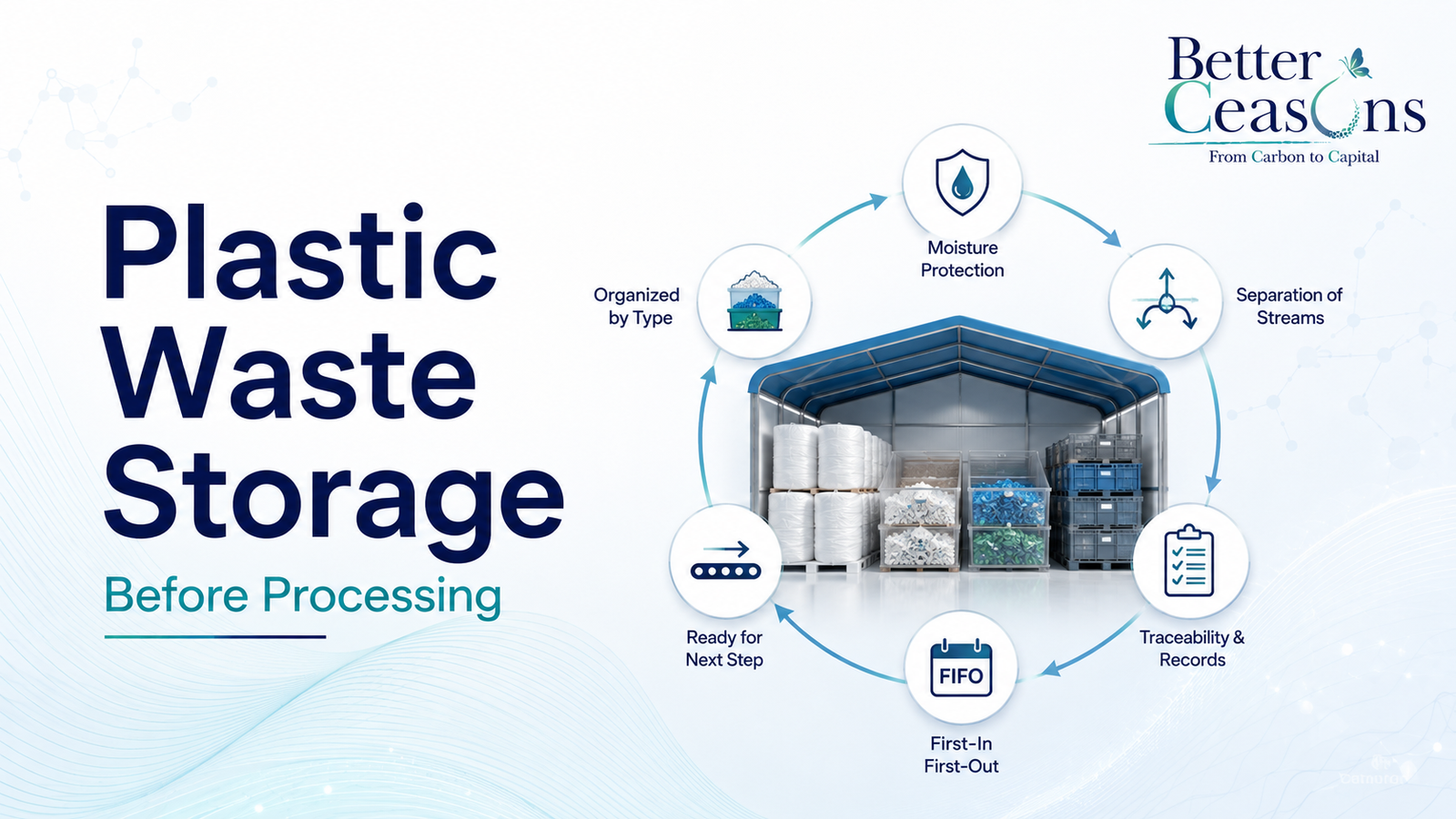
What happens to plastic before processing can determine what becomes possible during processing. A clean stream can become contaminated. A known polymer can become mixed with unidentified material. Dry packaging can collect rainwater. Separated plastic can be recombined with general waste. A short period of careless storage can undo work completed during collection and segregation. Plastic waste storage therefore deserves more attention than it usually receives. Storage is not simply somewhere to put material until the next truck arrives. It is a transition stage that should preserve the condition, identity and treatment potential of the waste.
Know what is entering the storage area
Good storage starts before plastic is placed on the floor or inside a container. Where practical, identify the source.Is it manufacturing scrap?
Post-consumer packaging?
Agricultural plastic?
Commercial film?
Mixed plastic from municipal collection?
The answer helps determine what contaminants may be present and which processing routes might later be appropriate. A known stream is easier to assess than an anonymous pile.Keep relatively clean material separate
waste segregation at source has an important role here. It can protect cleaner material from contamination and help downstream operators recognise different streams. The mistake is assuming that the process ends once materials are separated. Better Ceasons currently describes segregation as a way of organising and identifying waste rather than a final solution. Separated material still requires a responsible next step. Storage should preserve that separation wherever it has practical value.Avoid unnecessary moisture
Rainwater may seem harmless when the stored material is plastic, but moisture can create several operational problems. Water adds weight. Labels and paper components can degrade. Organic contamination can spread. Mud can become attached to the plastic. Water may become trapped inside packaging or compressed material. For some downstream technologies, high moisture can also increase preparation requirements. Keeping suitable plastic streams covered or otherwise protected from unnecessary water exposure can therefore preserve more predictable conditions.Do not allow storage to create new contamination
A common storage problem is treating all discarded plastic as though it is already equally dirty. It is not. Relatively clean film stored directly beside food-contaminated material can lose its quality. Industrial scrap stored in contact with soil may require cleaning that would never otherwise have been necessary. Open containers can collect unrelated litter. Waste management becomes harder when the condition of the material deteriorates between collection and treatment. Preventing this deterioration is often easier than repairing it later.Separate material where the difference affects treatment
Not every colour or product type needs its own storage area. Excessive separation can add unnecessary complexity. The useful question is whether keeping two streams apart protects a meaningful downstream option. For example, known production scrap may deserve separation from unknown post-consumer plastic. Heavily contaminated packaging may need to remain apart from clean rigid plastic. Certain multilayer structures may require separate assessment from common recyclable polymers. The objective is practical segregation rather than perfect categorisation.Keep basic records
Large generators and processors can improve traceability with straightforward information. Records may include the source of the waste, approximate quantity, date received, known material type and obvious contamination. This information becomes especially useful when multiple loads accumulate. Without identification, staff may later know that a pile contains plastic but have no idea whether it arrived yesterday or six months ago, whether it came from food packaging or industrial production, or whether particular contaminants are likely to be present. Storage should preserve information, not only mass.Use first-in first-out thinking where appropriate
Plastic does not rot in the same way as food, but indefinite storage is still poor practice. Older material can become buried behind new deliveries. Containers can degrade. Labels disappear. Contamination can increase. A first-in first-out approach can help prevent forgotten stock from gradually becoming permanent stock. The principle is simple. Material that enters storage should already have a planned route out.Temporary storage should not become hidden disposal
This is where storage connects with larger waste disposal problems. A site may technically call material stored even when there is no realistic plan to process it. Over time, the difference between storage and dumping becomes increasingly difficult to defend. Better Ceasons' Waste Illusion page currently focuses heavily on this problem of confusing movement with resolution. Waste can leave the place where it was generated while remaining an unresolved burden somewhere else. Responsible storage needs both capacity and a downstream destination.Fire and operational risks should be considered
Large quantities of plastic can create operational risks that deserve appropriate site-specific controls. Storage layout, access, ignition sources, incompatible materials and emergency arrangements should be addressed according to the facility, plastic type and applicable safety requirements. The goal is not only environmental protection. It is stable, manageable operations. Material that is stored carelessly can turn a routine processing buffer into a larger facility problem.Storage should reflect the future processing method
A plastic stream intended for physical recycling may need to remain particularly clean and identifiable. A stream being evaluated for plastic waste pyrolysis has different feedstock considerations. Better Ceasons' current pyrolysis page emphasises that feedstock must be suitable and that material condition, moisture and chemistry influence the process. This means storage cannot be planned independently of treatment. The destination should influence how the material is protected before it gets there.Mixed waste creates additional challenges
Where plastics arrive as part of mixed waste treatment, operators may need to manage variable material composition, moisture, physical form and contamination. Better Ceasons identifies exactly these variables as reasons real mixed waste cannot be treated as though it arrives in ideal laboratory condition. This is another reason early material identification is valuable. The longer incompatible streams remain mixed, the harder it can become to recover useful fractions efficiently.Storage can support resource recovery
A well-managed storage area does something more important than keeping a facility tidy. It protects possibilities. Material remains identifiable. Clean fractions stay cleaner. Moisture is controlled. Processing schedules become easier to plan. Traceability improves. Rejected or problematic material can be investigated separately rather than disappearing into a general pile. These small operational improvements can increase the chance that suitable material reaches resource recovery technology in a condition that the process can actually use. Better Ceasons' current future-facing content similarly argues that waste pathways should begin with understanding material chemistry and matching each stream with an appropriate solution.Conclusion
Plastic waste storage is not the most visible part of waste management, but it can determine the quality of everything that follows. Poor storage can add moisture, mix materials, remove traceability and create another disposal problem. Better storage preserves the material. It keeps known streams identifiable, protects cleaner waste from unnecessary contamination, controls accumulation and connects every stored load with a realistic next step. The best storage system therefore starts with a simple question.What processing route are we trying to preserve?
Once that answer is clear, the storage decisions become much easier.How to Store Plastic Waste Before Processing
A practical process for storing plastic waste before processing while preserving material quality, reducing contamination, maintaining traceability and supporting suitable downstream treatment.
Identify the incoming plastic waste
Identify the source and type of plastic entering storage, such as manufacturing scrap, post-consumer packaging, agricultural plastic, commercial film or mixed plastic.
Keep relatively clean material separate
Preserve useful segregation by keeping cleaner or known plastic streams separate from heavily contaminated or incompatible materials where this protects downstream processing options.
Protect plastic from unnecessary moisture
Where appropriate, protect stored plastic from rainwater and excess moisture that can add weight, spread contamination, degrade labels and increase preparation requirements.
Prevent new contamination
Avoid storing relatively clean material beside food-contaminated waste, soil, unrelated litter or other materials that could reduce its quality or increase cleaning requirements.
Separate streams when treatment differs
Keep plastic streams apart when differences in material type, contamination or construction affect the processing method or recovery opportunity.
Maintain basic records
Record information such as source, approximate quantity, date received, known material type and obvious contamination to maintain traceability.
Use first-in first-out practices where appropriate
Move older material towards processing before newer loads where suitable so stored plastic does not become forgotten or indefinitely accumulated.
Connect storage with a processing route
Store material according to the needs of its intended downstream treatment, such as physical recycling, mixed waste treatment or suitable plastic waste pyrolysis.
Plan a responsible route out of storage
Ensure stored material has a realistic downstream destination so temporary storage does not gradually become unresolved disposal.
Key Questions Answered
Should plastic waste always be stored indoors?↓
Requirements depend on the type of plastic, facility and intended processing method. The important principle is protecting material from unnecessary moisture and contamination.
Why should different plastics be stored separately?↓
Separation is useful when different materials require different treatment or when mixing would reduce the quality of a recoverable stream.
Can wet plastic be processed?↓
Some processes can handle moisture better than others. Excess water can still add weight and increase preparation requirements.
How long should plastic waste be stored?↓
There is no universal period for every operation, but storage should have a planned downstream route rather than becoming indefinite accumulation.
Why is traceability important?↓
Knowing where material came from and what it may contain helps processors select safer and more appropriate treatment pathways.
Written by Team Better Ceasons
Better Ceasons Editorial Team
Better Ceasons is a clean-technology enterprise transforming municipal solid waste streams into high-value carbon resources and renewable energy.
Explore Clean Tech Solutions
Better Ceasons has developed a solution that converts suitable plastic waste into fuel, supporting responsible resource recovery.
Explore Partnerships