
The carbon footprint of waste begins long before something reaches a landfill, dumping ground or treatment...
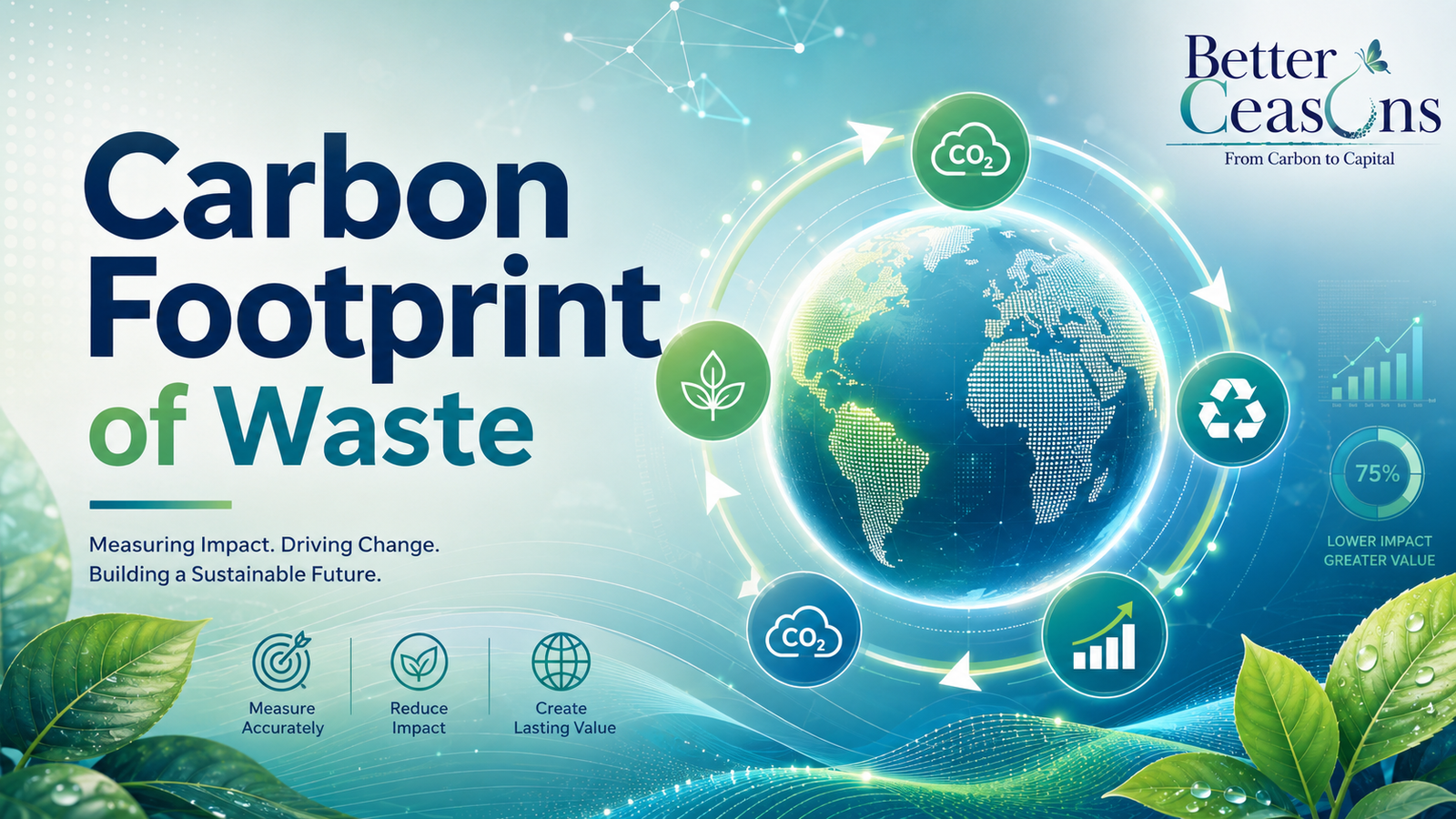
The carbon footprint of waste begins long before something reaches a landfill, dumping ground or treatment facility. Every material has a journey. It is produced, transported, used, collected, moved again, treated and eventually disposed of, recovered or transformed. At different stages of this journey, energy is consumed and greenhouse gas emissions may be generated. That is why understanding waste only by looking at how much we throw away gives us an incomplete picture. A better approach is to understand what happens to material throughout its complete journey and how those choices influence its environmental impact. This broader connection between waste, carbon emissions and climate change helps explain why waste management is increasingly becoming part of the global climate conversation.
What Is the Carbon Footprint of Waste?
The carbon footprint of waste is the greenhouse gas impact connected with a material throughout its journey. That journey can include production, collection, transportation, sorting, treatment, recycling, recovery, storage and final disposal. The impact is usually considered in terms of carbon dioxide equivalent, or CO₂e, which provides a common way of looking at different greenhouse gases. However, not every type of waste creates the same impact. Food waste behaves differently from plastic waste. Organic materials behave differently from metals, electronics or construction materials. Where the material goes and how it is handled also matters. Understanding the carbon footprint therefore requires looking beyond the waste bin and considering the complete pathway a material follows.Where Do Carbon Emissions From Waste Come From?
Carbon emissions from waste can arise at several points. Waste needs to be collected. Collection vehicles require energy. It may then be transported to sorting centres, processing facilities, recycling units, treatment facilities or disposal sites. Each additional movement may require more fuel or electricity. Treatment processes can also use energy, while certain materials may release greenhouse gases as they break down or are processed. The final carbon impact depends on factors such as the type of waste, distance travelled, treatment method, energy source and final destination. This is why simply moving waste away from where it was generated does not necessarily remove its environmental impact.Waste Does Not Disappear After Collection
One of the biggest misconceptions about waste is that once it has been collected, the problem has been solved. In reality, collection is only one stage. Better Ceasons explores this idea through The Waste Illusion, which looks at what happens to materials after they leave our homes, workplaces and neighbourhoods. Waste may travel to a treatment facility, recovery system, landfill or dumping ground. Some material may be successfully recovered. Some may remain stored for years. Other waste may enter poorly managed disposal systems where its environmental impact continues. Understanding this hidden journey is essential when calculating the true carbon footprint of waste.Why Landfill Methane Matters
Methane is one of the most important links between waste and climate change. When certain biodegradable materials break down in environments with very little oxygen, methane can be produced. This can happen when organic materials such as food waste are buried in landfill conditions. Methane is a powerful greenhouse gas, which means the way biodegradable waste is handled matters significantly from a climate perspective. The issue also does not necessarily disappear when a landfill stops receiving waste. Organic material already buried within it can continue decomposing over time. This means responsible waste management needs to consider not only where waste is placed but also what happens to the material afterwards.Food Waste Has a Carbon Journey
Food waste provides a good example of why waste carbon footprints need to be viewed across a complete life cycle. Before food becomes waste, land, water, energy and other resources have already been used to produce it. Additional energy may have been required for processing, refrigeration, packaging, transportation, storage and preparation. When edible food is discarded, those resources have effectively been used for something that never fulfilled its intended purpose. The carbon story does not end there. If food waste is then transported to a disposal site and decomposes under low oxygen conditions, additional greenhouse gas emissions may follow. Preventing unnecessary food waste therefore has an environmental benefit that begins before disposal.Transportation Adds to the Carbon Footprint
Waste rarely remains in the place where it is generated. After collection, it can travel between transfer stations, sorting facilities, treatment centres and final destinations. Transportation therefore becomes another part of the carbon footprint of waste. The scale of that impact can depend on distance, vehicle efficiency, collection frequency, route planning and how much material each vehicle carries. A waste system that requires material to travel unnecessarily long distances may carry a different carbon impact from one with efficiently planned collection and appropriate treatment infrastructure nearby. Moving waste out of sight is not the same as removing its environmental consequences.Different Waste Streams Need Different Solutions
There is no universal waste treatment that works equally well for every material. Organic waste, mixed plastic, agricultural residues, municipal solid waste, biomedical materials and legacy landfill waste all have different characteristics. Their possible environmental impacts are also different. This is why responsible waste management should begin by understanding the material itself. Its composition, condition, contamination level and potential remaining value can influence what should happen next. Better Ceasons applies this wider thinking to waste transformation, energy recovery and resource recovery, where suitable waste streams are considered according to what useful value may still remain within them.Can Segregation Reduce Waste Related Emissions?
Segregation can make it easier to identify different materials and direct them towards suitable treatment or recovery pathways. Separating organic materials from recyclable or non recyclable waste, for example, can improve the ability to manage each stream appropriately. But segregation itself is not the final solution. The material still needs somewhere meaningful to go. Better Ceasons examines this challenge through its discussion of waste segregation at source, highlighting why organising waste is useful but must be followed by effective treatment, recovery or responsible disposal. From a carbon perspective, the quality of the entire system after segregation matters.How Recycling Can Influence the Carbon Footprint of Waste
Recycling can reduce environmental impact when recovered material replaces some demand for new raw materials. Producing material from virgin resources may involve extraction, transportation, refining and manufacturing. Keeping suitable materials within productive use can therefore avoid some of those impacts. However, recycling is not automatically emission free. Waste still needs to be collected, sorted, cleaned and processed. The climate benefit depends on the type of material, the efficiency of the recovery process and whether recycled material genuinely replaces demand for virgin material. The bigger objective should be to understand which pathway creates the most responsible outcome for each waste stream.Resource Recovery Changes the Waste Conversation
Traditional disposal systems often begin with the question of where unwanted material should go. Resource recovery asks something different.What useful value may still remain in the material?
A material may have finished its original purpose without losing all of its potential value. Depending on the waste stream, that value may be recovered in the form of reusable material, energy or another productive output. This is the thinking behind Better Ceasons' broader approach to resource recovery from waste. Instead of assuming disposal is always the final destination, suitable materials can first be evaluated for responsible recovery possibilities.Waste Conversion and Net Zero
Reducing the carbon footprint of waste also requires thinking about materials that are difficult to reuse or recycle through conventional systems. Different technologies can potentially provide pathways for suitable waste streams. One such area is pyrolysis, a thermal conversion process carried out under controlled conditions with limited or no oxygen. The suitability and environmental performance of any process depend on the waste stream, technology, energy requirements, outputs and overall system. The relationship between pyrolysis technology and net zero therefore needs to be viewed through the complete carbon journey rather than treating any single technology as a universal answer. This same principle applies across waste management. Responsible decisions come from understanding the material first and then evaluating the most suitable pathway.How Can the Carbon Footprint of Waste Be Reduced?
Reducing waste related emissions requires action across several stages. Preventing unnecessary waste is one of the strongest starting points because it can avoid impacts before the disposal stage even begins. Products that remain useful for longer may also reduce the need for replacement materials. Better segregation can help keep different waste streams suitable for recycling, treatment or recovery. Efficient collection systems can reduce unnecessary transport. Organic materials can be directed towards more appropriate management pathways rather than simply being mixed with other waste and sent for uncontrolled disposal. Recoverable materials can be assessed for continued productive use. Waste that cannot reasonably be reused or recycled can be evaluated for suitable treatment or recovery technologies. The most effective approach is therefore not one single solution. It is a better connected waste system.Why Waste Is Also a Climate Issue
Waste is often discussed as a cleanliness or disposal problem. Its climate impact makes the issue much wider. Materials consume resources before they become waste. Collection and transportation use energy. Treatment can create emissions. Organic materials may generate methane under certain conditions. Recoverable resources may also be permanently lost when material is simply dumped. Understanding the carbon footprint of waste connects all of these stages. It encourages businesses, cities and individuals to look beyond how quickly waste can be removed and instead consider what happens to that material next.Better Thinking About Waste and Carbon
The carbon footprint of waste does not begin at the landfill gate and it does not end when the collection vehicle leaves. It develops throughout the material's journey. Reducing that footprint requires better decisions about what we consume, what we discard, how materials are separated, how far they travel, how they are treated and what value can still be recovered from them. Waste therefore needs to be understood as part of a wider carbon and resource system. A material that has reached the end of one purpose may not have reached the end of its value. When we begin looking at waste through its complete journey, the conversation shifts from simply getting rid of material to finding more responsible ways of managing what remains. That is where better thinking for cleaner living begins.How to Reduce the Carbon Footprint of Waste
A practical approach to reducing waste-related greenhouse gas emissions across prevention, segregation, collection, treatment and resource recovery.
Prevent unnecessary waste
Reduce unnecessary waste at the source so that environmental impacts can be avoided before collection, treatment and disposal are required.
Extend the useful life of products
Keep products useful for longer where possible to reduce the need for replacement materials and the waste associated with them.
Improve waste segregation
Separate different waste streams so suitable materials can be directed towards appropriate recycling, treatment or recovery pathways.
Improve collection and transportation efficiency
Plan collection systems and transportation efficiently to reduce unnecessary travel, fuel consumption and related emissions.
Manage organic waste appropriately
Direct organic materials towards suitable management pathways rather than mixing them with other waste and sending them for uncontrolled disposal.
Keep recoverable materials in productive use
Assess recoverable materials for recycling, reuse or other forms of continued productive use instead of treating disposal as the automatic final destination.
Evaluate suitable treatment and recovery technologies
For waste that cannot reasonably be reused or recycled, evaluate appropriate treatment, conversion or resource recovery technologies based on the characteristics of the waste stream.
Key Questions Answered
What is the carbon footprint of waste?↓
The carbon footprint of waste is the greenhouse gas impact associated with a material across its journey. It can include emissions from collection, transportation, treatment, processing, recovery and final disposal.
How does waste contribute to climate change?↓
Waste can contribute to climate change through greenhouse gas emissions generated during transportation, treatment and disposal. Certain organic materials can also produce methane when they decompose under low oxygen conditions.
Why do landfills produce methane?↓
Landfills can produce methane when biodegradable organic materials break down in environments where very little oxygen is available. The amount produced depends on the material and landfill conditions.
Does recycling reduce carbon emissions?↓
Recycling can reduce emissions when recovered materials replace demand for virgin resources and the overall recycling process creates an environmental benefit. The impact varies according to the material and recovery process.
Does waste segregation reduce the carbon footprint of waste?↓
Waste segregation can support lower impact waste management by keeping different materials suitable for appropriate recycling, treatment or recovery pathways. Its effectiveness depends on what happens to the segregated material afterwards.
How can sustainable waste management reduce carbon emissions?↓
Sustainable waste management can reduce emissions by preventing unnecessary waste, improving segregation and collection, keeping useful materials in circulation, managing organic waste responsibly, reducing inefficient transportation and considering suitable treatment or resource recovery options.
Written by Team Better Ceasons
Better Ceasons Editorial Team
Better Ceasons is a clean-technology enterprise transforming municipal solid waste streams into high-value carbon resources and renewable energy.
Explore Clean Tech Solutions
Better Ceasons has developed a solution that converts suitable plastic waste into fuel, supporting responsible resource recovery.
Explore Partnerships