
The climate impact of waste is easy to underestimate because most of its journey happens somewhere...
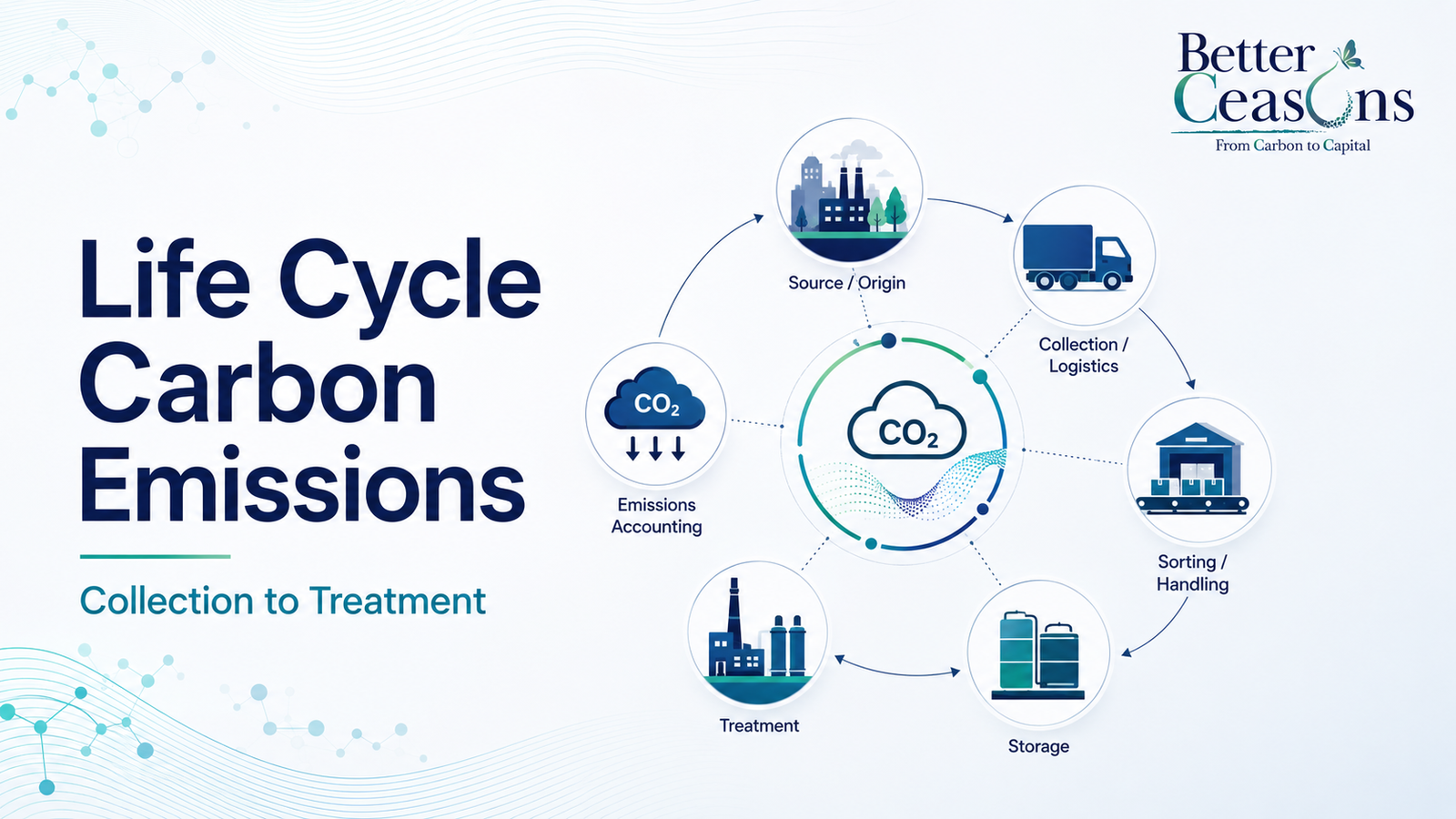
The climate impact of waste is easy to underestimate because most of its journey happens somewhere else. A household sees a collection vehicle arrive and leave. A business watches a waste contractor remove a container. A city measures tonnes collected. From the generator's point of view, the material has disappeared. From a carbon perspective, however, the journey may only have begun. Fuel can be consumed during collection. Waste may travel through transfer stations before reaching a final facility. Machinery may sort, compact or prepare the material. Storage can add further handling. Treatment requires infrastructure and energy. Organic fractions may create methane under certain disposal conditions. Looking at only one stage can therefore produce a misleading picture of carbon emissions from waste. Better Ceasons currently makes the same lifecycle connection, describing waste-related carbon as extending through production, transportation, handling, storage and final treatment rather than appearing only at the disposal stage.
Carbon begins before the waste truck arrives
A discarded object already has a carbon history. Raw materials were extracted or grown. Energy was used to manufacture it. The finished product was packaged and transported. It may have travelled through several stages before reaching the person or business that used it. When the product becomes waste, a second journey begins. This is why the carbon footprint of waste is broader than emissions from a landfill or treatment facility. It reflects a material system. Once useful material is discarded permanently, replacing it can also require another manufacturing journey. Better Ceasons includes this loss of resources within its current explanation of waste-related carbon.Collection creates the first visible operational footprint
Collection is essential, but it is not carbon-free. Vehicles need energy. Routes differ in distance. Frequent collection of lightly filled containers can produce a different result from efficient routing of fuller loads. The type of neighbourhood or industrial area also matters. Dense urban collection, long rural routes and specialised waste transport create different operating conditions. This does not mean waste should simply remain where it is generated. It means collection should be recognised as part of the environmental system instead of being treated as a neutral step. Route optimisation, sensible collection frequency and reducing waste transport emissions can all become part of carbon management.Waste often travels more than once
The route between generator and treatment plant is not always direct. Waste may first reach a local collection point. From there it can move to a transfer station, sorting centre, storage yard or preprocessing facility. Each movement can add fuel use and handling. This is where lifecycle thinking becomes useful. A treatment technology may perform well at the facility itself but still sit within an inefficient logistics chain. Conversely, a system that brings suitable treatment closer to consistent waste sources may reduce repeated transport. The most important comparison is therefore between complete pathways rather than individual pieces of equipment.Sorting has an energy footprint but can still improve the wider result
Sorting equipment, balers, conveyors and other machinery require energy. That does not automatically make sorting environmentally undesirable. If sorting enables valuable materials to return to productive use, the wider outcome may justify the energy consumed. The same principle applies to waste segregation at source. Better Ceasons argues that segregation is useful for identifying materials but cannot be treated as the final solution because each separated stream still needs a responsible destination. Carbon accounting should follow that next step too.Storage can become an invisible part of the footprint
Waste awaiting treatment can remain in temporary storage. When that storage is organised and short-term, it can support efficient logistics. When there is no clear downstream route, however, material may be moved repeatedly or remain unresolved for long periods. For organic waste, conditions during storage can also affect decomposition. This is one reason Better Ceasons’ environmental impact of waste perspective is relevant. The site emphasises that waste does not stop having consequences simply because it is no longer visible to the person who produced it.Treatment changes the carbon profile again
Different treatment methods create different carbon relationships. Physical recycling has its own energy and processing requirements. Biological treatments depend on the material and process. Energy recovery systems involve conversion and emissions controls. Landfill involves long-term material storage and can create methane when suitable organic matter breaks down in oxygen-poor environments. Pyrolysis involves controlled thermal transformation of selected feedstocks. There is no meaningful carbon comparison unless the same lifecycle boundary is used for each option. A facility-only comparison may ignore transport and preprocessing for one technology while including them for another.Methane deserves special attention
Methane emissions from waste are particularly relevant to organic fractions. When suitable organic matter decomposes under very low oxygen conditions, methane can be produced. Better Ceasons includes this process in its explanation of the relationship between waste and climate change. This means the type of waste matters as much as its weight. One tonne of dry plastic and one tonne of biodegradable organic matter cannot be treated as identical simply because both weigh one tonne. Carbon accounting needs to reflect the behaviour of the material.Recovery changes what the system replaces
A lifecycle calculation should also ask what useful outcome is produced. If material is genuinely recovered and used again, some demand for new material may be displaced. If suitable waste produces usable energy, the result depends partly on what energy source that output replaces. If a conversion process produces an industrial feedstock, the carbon relevance depends on whether that output actually enters a productive application. This is the deeper meaning behind resource recovery from waste. Recovery should be measured through actual outcomes rather than assumed simply because waste entered a processing facility.The shortest route is not automatically the cleanest route
Distance matters, but distance alone does not decide environmental performance. A nearby poorly controlled disposal route is not automatically better than a more appropriate treatment facility located farther away. At the same time, transporting low-value material extremely long distances can undermine the environmental logic of recovery. The correct balance depends on the waste, the available technologies and the comparative lifecycle impact. This is where good decision-making moves beyond slogans.Carbon data can reveal operational improvements
Once the waste journey is mapped, businesses and waste operators can begin identifying where unnecessary emissions occur. A route may involve too many transfer points. A material may be travelling long distances because it is mixed with incompatible waste. Poor storage may increase moisture and handling. A potentially recoverable stream may be entering disposal because information about its composition is missing. Carbon analysis can turn these invisible inefficiencies into measurable decisions. That is the practical value of net zero waste management. Better Ceasons currently frames it around reducing avoidable emissions across the full material journey while recovering useful value where responsible pathways exist.The complete journey is the real unit of comparison
A waste facility is only one moment in a much longer story. Life cycle carbon emissions begin with materials, continue through use and then extend into collection, transport, handling, storage and treatment. Better decisions come from asking what happens across that complete chain.Which movements are necessary?
Which are avoidable?
Which material can be recovered?
What treatment prevents a larger environmental burden?
Where are greenhouse gas emissions actually being created?
When those questions become part of waste management, carbon stops being a distant climate concept and becomes an operational tool.How to Assess Life Cycle Carbon Emissions From Waste
A practical process for evaluating carbon emissions across the complete waste journey, including collection, transportation, sorting, storage, treatment and recovery.
Map the complete waste journey
Identify where the material comes from and map its journey through collection, transfer, sorting, storage, treatment and final recovery or disposal.
Measure collection emissions
Consider fuel or energy used during waste collection, including route distances, collection frequency and how efficiently vehicles and containers are used.
Include transportation and transfer points
Account for every movement between the waste generator, collection points, transfer stations, sorting facilities, storage locations and final treatment facilities.
Assess sorting and storage
Include the energy used by sorting equipment, conveyors, balers and other machinery, along with additional handling or impacts created during temporary storage.
Evaluate treatment emissions
Assess the emissions and energy requirements associated with the selected treatment method, such as physical recycling, biological treatment, energy recovery, landfill or suitable thermal conversion.
Account for methane where relevant
Consider methane emissions when biodegradable organic material decomposes under oxygen-poor conditions, particularly in disposal environments such as landfill.
Measure recovery outcomes
Identify whether recovered materials, energy or industrial feedstocks replace virgin materials, conventional energy or other resources in productive applications.
Compare complete pathways
Compare waste management options using the same lifecycle boundary so that transport, handling, preprocessing, treatment and recovery are assessed consistently.
Key Questions Answered
What are carbon emissions from waste?↓
They are greenhouse gas emissions associated with the production, handling, transportation, treatment, decomposition and disposal of materials that become waste.
Does waste collection create carbon emissions?↓
Collection can create emissions through fuel or energy use, particularly when routes are long or inefficient.
Why should transportation be included in waste carbon calculations?↓
Because some waste travels through several facilities before treatment. Ignoring those movements can hide part of the lifecycle impact.
How does landfill affect the carbon footprint of waste?↓
Landfill can create long-term impacts, particularly when biodegradable material produces methane under oxygen-poor conditions.
What does lifecycle thinking improve?↓
It helps organisations compare complete waste pathways instead of judging a solution from one stage alone.
Written by Team Better Ceasons
Better Ceasons Editorial Team
Better Ceasons is a clean-technology enterprise transforming municipal solid waste streams into high-value carbon resources and renewable energy.
Explore Clean Tech Solutions
Better Ceasons has developed a solution that converts suitable plastic waste into fuel, supporting responsible resource recovery.
Explore Partnerships