
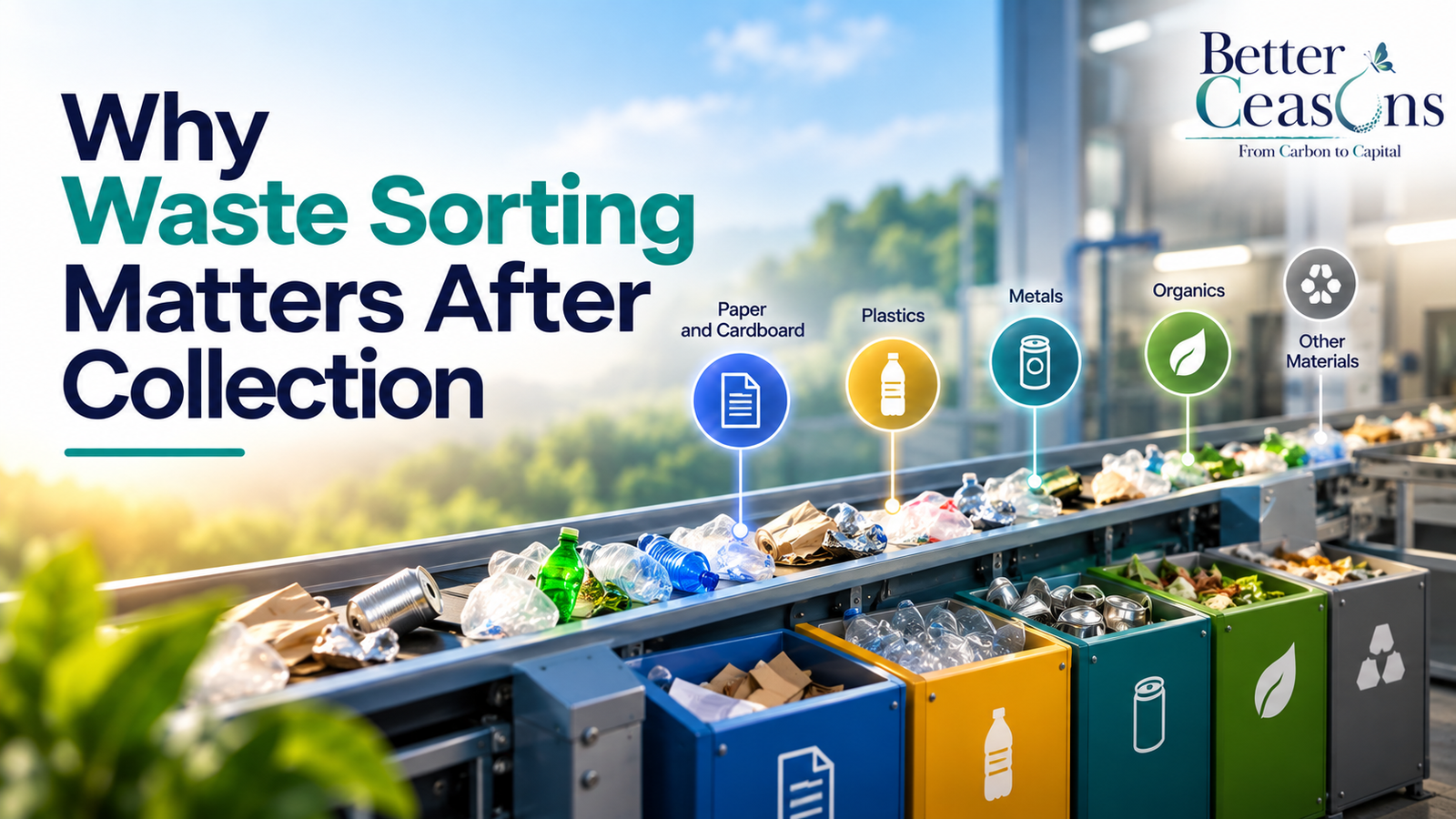
The waste sorting process separates collected waste into different material categories so that recyclable, recoverable, organic, hazardous and residual streams can receive more appropriate treatment. Sorting is important, but it is not the final solution because each separated material still needs a responsible downstream pathway.
Quick Answer
The waste sorting process separates collected waste into different material categories so that recyclable, recoverable, organic, hazardous and residual streams can receive more appropriate treatment. Sorting is important, but it is not the final solution because each separated material still needs a responsible downstream pathway.waste collection process Creates a Mixed Material Challenge
A collection vehicle can contain many different materials. These may include:- paper
- cardboard
- plastic
- glass
- metals
- food
- textiles
- composite packaging
What Is Waste Sorting?
Waste sorting is the process of separating materials based on characteristics such as:- material type
- size
- weight
- magnetic properties
- optical properties
- contamination
Manual Sorting Still Plays a Role
Human workers can identify materials that machines may find difficult to recognise. Manual sorting is flexible, but it can be physically demanding. Facilities need appropriate worker protections and operational controls.Mechanical Systems Improve Separation
Modern facilities may use several technologies.Screens
Screens separate waste by size.Magnets
Magnets can remove ferrous metals.Eddy Current Separation
These systems can help separate certain non-ferrous metals.Air Classification
Air can separate lighter materials from heavier ones.Optical Sorting
Sensors can identify materials based on optical characteristics. Each technology addresses a different part of material sorting.Why Waste Separation Matters
Good waste separation can protect material value. Clean cardboard is easier to recover than cardboard saturated with food waste. A consistent plastic stream is easier to process than an unpredictable mixture. Separating materials therefore creates better opportunities for downstream recovery.But Sorting Does Not Solve Everything
Better Ceasons challenges the idea that segregation alone solves waste through Segregation The Urban Myth. Sorting can organise material. It cannot guarantee what happens next. A perfectly separated plastic stream still needs a processor. A sorted organic stream still needs biological treatment. Residual waste still needs responsible management.Some Materials Stay Difficult Even After Sorting
Multilayer packaging is a useful example. A facility may successfully isolate it from food and paper. But the package itself still contains multiple bonded materials. Sorting has identified the problem. It has not solved the material structure.Sorting Supports Recycling
For suitable materials, better sorting can improve recycling efficiency. Cleaner incoming material reduces the need for additional separation and may improve recovered output quality. This can strengthen recycling economics.Sorting Also Supports Resource Recovery
Resource recovery goes beyond recycling. Sorting can direct materials toward:- composting
- energy recovery
- specialised processing
- controlled transformation
Contamination Is a Major Challenge
One heavily contaminated material can affect others. Liquids can damage paper. Food can contaminate plastic. Broken glass can create safety problems. Improving source separation can reduce these challenges before material reaches sorting facilities.Sorting Needs a Market
A facility can separate dozens of material categories. But if no processor or market exists for those categories, sorting has limited value. Infrastructure should therefore be designed around real downstream opportunities.Technology Will Continue Improving
Future facilities may use more:- machine vision
- artificial intelligence
- robotics
- advanced sensors
- automated quality monitoring
Better Sorting Starts With Better Awareness
People often receive simple instructions about which bin to use. Better awareness should also explain why segregation matters. When people understand that contamination can reduce recovery potential, sorting becomes a material-quality decision rather than simply a rule.Final Thought
The waste sorting process matters because mixed waste contains very different materials. Sorting reveals those differences and allows better pathways to become possible. But sorting is a bridge, not the destination. The real measure of success is what happens to each material after it has been separated.How the Waste Sorting Process Works
A practical overview of how collected waste can be separated by material characteristics and directed toward appropriate recovery or treatment pathways.
Receive the collected waste
Mixed collected waste enters a sorting facility and may contain materials such as paper, cardboard, plastic, glass, metals, food, textiles and composite packaging.
Separate materials by size
Screens can be used to separate materials according to size and prepare the waste stream for further sorting.
Recover ferrous metals
Magnets can remove ferrous metals from the mixed waste stream.
Separate certain non-ferrous metals
Eddy-current systems can help separate certain non-ferrous metals from other materials.
Separate light and heavy materials
Air classification systems can use differences in material weight and aerodynamic behaviour to separate lighter materials from heavier ones.
Identify materials with optical sorting
Optical sensors can identify materials based on their optical characteristics and help create more consistent material streams.
Use manual sorting where required
Human workers may identify or remove materials that automated systems find difficult to recognise or separate.
Check contamination and material quality
Separated materials are evaluated for contamination and quality because these factors influence whether downstream recovery is practical.
Direct materials to appropriate pathways
Sorted materials may be sent to recycling, composting, energy recovery, specialised processing, controlled transformation or residual management depending on their characteristics.
Key Questions Answered
Why is waste sorting important?↓
It helps separate materials so they can receive appropriate recycling, recovery or treatment.
Is waste sorting the same as recycling?↓
No. Sorting prepares material for potential downstream recycling or treatment.
What technologies are used in sorting facilities?↓
Facilities may use screens, magnets, air separation, optical sensors and automated equipment.
Does all sorted waste get recycled?↓
No. Recovery depends on material quality, infrastructure and market demand.
Why is contamination a problem?↓
Contamination can reduce material quality and make recovery more difficult or expensive.
Written by Team Better Ceasons
Better Ceasons Editorial Team
Better Ceasons is a clean-technology enterprise transforming municipal solid waste streams into high-value carbon resources and renewable energy.
Explore Clean Tech Solutions
Better Ceasons has developed a solution that converts suitable plastic waste into fuel, supporting responsible resource recovery.
Contact Better Ceasons