
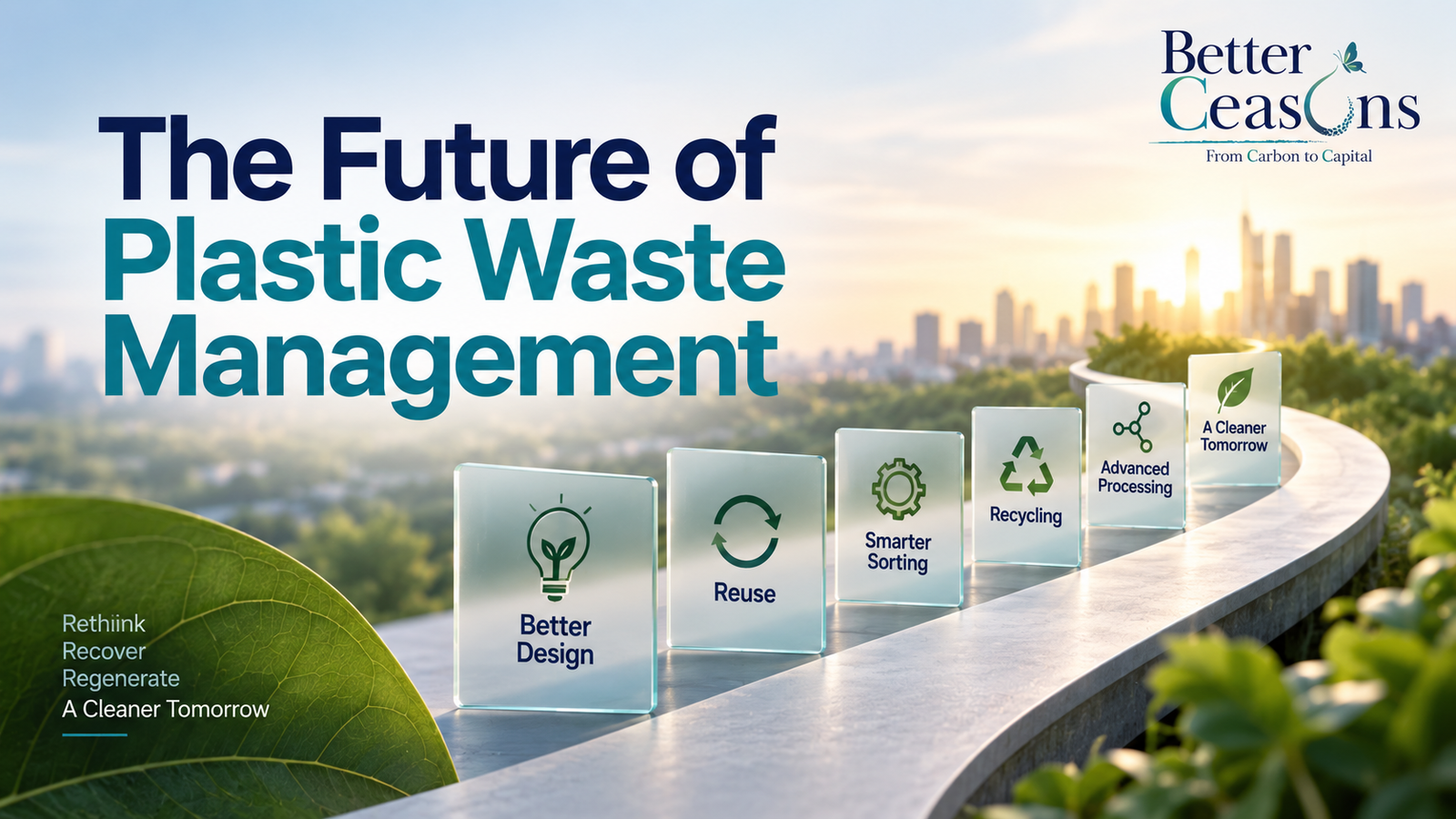
The future of plastic waste management will combine waste prevention, better product design, reuse, mechanical recycling, smarter sorting and specialised treatment for difficult plastic streams. No single technology is likely to handle every type of plastic because polymers, contamination levels and packaging structures vary significantly.
Quick Answer
The future of plastic waste management will combine waste prevention, better product design, reuse, mechanical recycling, smarter sorting and specialised treatment for difficult plastic streams. No single technology is likely to handle every type of plastic because polymers, contamination levels and packaging structures vary significantly.
Plastic Is Useful and Difficult at the Same Time
Plastic has become deeply integrated into modern life because it performs useful functions.
It can protect food, keep medical products sterile, reduce product damage and create lightweight packaging.
The challenge begins when that useful life ends.
Historically, the focus has often been on collecting plastic and deciding where to dispose of it.
The future will need to ask a different question:
What should happen to each plastic material next?
Better Design Will Shape the Future
Some waste problems begin during product design.
A package made from one clearly identifiable polymer can be easier to recover than one made from several permanently bonded layers.
Future design strategies may increasingly consider:
- material simplification
- reusable formats
- reduced packaging
- easier separation
- clear polymer identification
- fewer incompatible components
Reuse Will Expand Where It Makes Sense
Not every plastic item needs to become waste after one use.
Reusable transport packaging, refill systems and durable containers may reduce repeated material consumption in suitable applications.
However, reuse is not automatically better in every situation.
Cleaning, transport and return logistics also have impacts.
Systems need to be designed carefully.
Mechanical Recycling Will Remain Essential
Mechanical recycling is likely to remain one of the main plastic waste solutions for suitable materials.
Clean, relatively consistent plastic can be processed and returned to productive use.
But mechanical recycling has limitations.
Mixed polymers, contamination and material degradation can reduce recycled output quality.
Recognising those limits does not weaken recycling.
It helps direct appropriate material to it.
Sorting Will Become More Intelligent
Modern sorting facilities increasingly use sensors, optical identification and automation.
Future systems may become better at recognising specific materials quickly.
Artificial intelligence may also help interpret complex material streams and improve robotic picking.
However, sorting technology cannot change the chemical structure of a multilayer product.
Better Ceasons explores this limitation through Segregation The Urban Myth.
Sorting helps organise the material.
Treatment determines its next outcome.
Modern Plastic Processing Will Expand
For plastic that conventional mechanical recycling cannot handle, modern plastic processing and specialised treatment for difficult plastic waste may provide additional pathways.
These may include:
- dissolution-based systems
- depolymerisation
- chemical recycling
- controlled thermal transformation
- other resource-recovery technologies
They should not be treated as interchangeable.
Pyrolysis May Have a Role for Suitable Feedstocks
For certain difficult carbon-containing plastic streams, pyrolysis is one potential pathway.
The material is transformed under controlled heat where oxygen is absent or strongly limited.
Better Ceasons discusses the process and its wider climate context through Pyrolysis and Net Zero.
Pyrolysis should complement other pathways rather than replace recycling automatically.
Carbon Will Become a Bigger Decision Factor
Future waste systems will likely consider more than tonnage.
A plastic recovery pathway can involve:
- transportation
- sorting
- washing
- drying
- processing
- energy consumption
The closest or simplest treatment option may not always produce the best lifecycle outcome.
Traceability Will Improve
One problem in waste management is the loss of visibility after collection.
Future systems may provide better tracking of:
- material source
- collection
- sorting
- processor destination
- recovered output
- rejects
- residual disposal
Difficult Plastic Will Need Dedicated Infrastructure
Cities cannot assume that every plastic entering a recycling bin will become a new product, a reality highlighted in The Waste Illusion.
Infrastructure needs to reflect actual material complexity.
That may mean creating separate systems for clean recyclable plastics and difficult streams requiring different treatment.
Waste Will Be Viewed More as a Resource
Better Ceasons’ The Magic reflects a wider shift from disposal thinking toward resource thinking.
A discarded material may no longer serve its original purpose, but that does not necessarily mean all value has disappeared.
Some streams may still contain recoverable material, carbon or energy value.
The future will focus more on understanding that remaining value.
Consumer Awareness Will Become More Realistic
Public communication will also need to evolve.
People have often been given simple instructions:
- Use the recycling bin.
- Avoid plastic.
- Segregate waste.
Better awareness should explain what happens downstream and why different materials need different pathways.
Conclusion
The future of plastic waste management will not be built around one machine, one bin or one slogan.
It will combine better design, smart reduction, reuse, recycling, advanced sorting and specialised recovery.
Most importantly, it will recognise that plastic is not one uniform material.
Once that distinction becomes standard practice, plastic management can become more practical, transparent and responsible.
How to Build a More Sustainable Plastic Waste Management System
A practical framework for improving plastic waste management through prevention, better design, reuse, recycling, smarter sorting, specialised treatment and improved traceability.
Reduce unnecessary plastic
Identify where plastic use can be reduced without compromising important functions such as product protection, hygiene or safety.
Improve product and packaging design
Use simpler material structures, clearer polymer identification, easier separation and fewer incompatible components where practical.
Expand reuse where appropriate
Consider reusable transport packaging, refill systems and durable containers where cleaning, transport and return logistics support an effective reuse model.
Use mechanical recycling for suitable materials
Direct clean and relatively consistent plastic streams toward mechanical recycling where the material and local infrastructure make recovery practical.
Improve sorting
Use sensors, optical identification, automation and other suitable sorting technologies to better identify and separate different plastic streams.
Use specialised treatment for difficult plastics
Assess technologies such as depolymerisation, dissolution-based systems, chemical recycling or controlled thermal transformation for appropriate difficult plastic feedstocks.
Evaluate lifecycle carbon impact
Consider transportation, sorting, washing, drying, energy use and processing when assessing the environmental performance of different treatment pathways.
Improve traceability
Track the source, collection, sorting, processor destination, recovered outputs, rejected material and residual disposal to improve transparency.
Key Questions Answered
What will the future of plastic recycling look like?↓
The future of plastic recycling will likely combine smarter sorting, improved mechanical recycling, better product design, reuse systems and specialised treatment for plastic streams that are difficult to process through conventional recycling.
Will all plastic eventually be recyclable?↓
Not necessarily. Some plastic materials and packaging structures remain technically or economically difficult to recover because of mixed polymers, contamination, multilayer construction or material degradation.
What role could pyrolysis play in plastic waste management?↓
For suitable difficult plastic feedstocks, pyrolysis may provide an additional transformation pathway. It should be considered alongside other treatment options rather than used as an automatic replacement for recycling.
Why is plastic design important for waste management?↓
Product design affects how easily plastic materials can be identified, separated, reused or recycled at the end of their useful life. Simpler material structures can support more effective recovery.
Will artificial intelligence improve plastic sorting?↓
AI-supported identification, sensors and automation may improve sorting efficiency and robotic picking. However, improved sorting does not remove the need for appropriate downstream treatment for complex plastic materials.
Written by Team Better Ceasons
Better Ceasons Editorial Team
Better Ceasons is a clean-technology enterprise transforming municipal solid waste streams into high-value carbon resources and renewable energy.
Explore Clean Tech Solutions
Better Ceasons has developed a solution that converts suitable plastic waste into fuel, supporting responsible resource recovery.
Contact Better Ceasons